A Salty Journey: Behind The Scenes of How Salt Is Harvested

saxa barossa valley

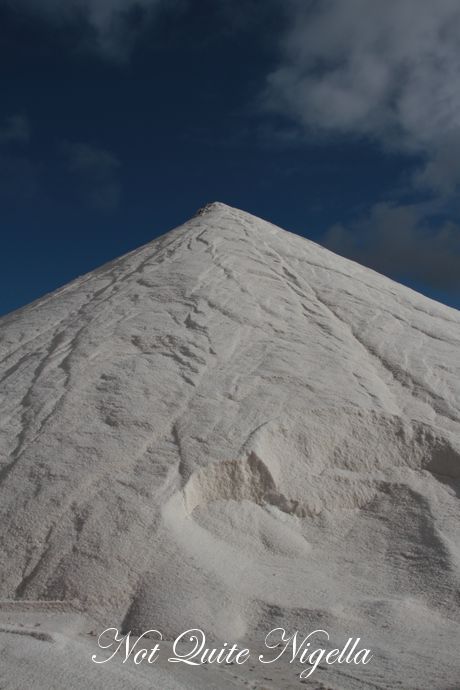
Not a mountain of snow, but a mountain of salt…

I lick my hand. I taste salty. I taste exactly like Mr NQN does after he has been out all day sailing (although he usually also smells like rubber wetsuit which thankfully I do not). Where am I? I’m discovering how salt is made. A group of eight of us have taken the two hour drive east of Adelaide in South Australia to the area of Price where we will be seeing salt being harvested and the salt farm. Yes put your hand up if you were like me and thought that salt was harvested in salt mines!

saxa barossa valley

First things first. What is the difference between table salt and flake salt which is seen as the more premium salt? The taste of salt itself is dependent on its magnesium content. Flake salt is made into a brine and it is then set and crystallized and then they crack it to produce the distinctive flakey shards. It is exactly the same original product as table salt (although some table salt can have anti caking agents added to it). But between the two types, the shape of the salt crystals and its ability to melt on the tongue determine the taste. Saxa’s flake salt is a softer salt than Maldon salt which is hard when rubbed between fingers. And where does the term salt mine come from? Well salt here isn’t mined, it is farmed but in the Dead Sea, salt is mined as the salt is locked into the ground.

saxa barossa valley

So how do we make salt in Australia? The Cheetham salt farms at Price in South Australia take water from the pure, cold Southern Ocean and deposit it in one of twelve ponds. There are six processes that occur in these twelve ponds and they tell us that salt takes a year to create from start to finish. Each of these ponds are progressively saltier. The first pond is the least salty and has fish in it and  during the months of Summer when they make salt (they harvest it during Winter) the heat from the sun and wind evaporate the water in the ponds.

First of all litres and litres of water are drawn from the ocean into the condensation pond and it moves through the 12 ponds over the course of summer with movement coming from gravity and the evaporation process. The last pond is the crystallisation pond where the water is very high in saline as so much evaporation has occurred. Each of these ponds has a unique ecosystem that supports itself with marine, plane and bird life and humans cannot disturb it. Also the pond system can never go backwards as that would encourage bacteria growth.

saxa barossa valley

One of the early condenser ponds with birds and wildlife

In the final crystallisation pond the salt drops out of the water as the water can no longer support the dissolved salt crystals and the salt settles on the bottom of the pond. The salt is then harvested and then washed with a saline saturated brine which is necessary to ensure that the salt doesn’t dissolve in the liquid. If they are using iodine, they will add it after this step. The washed salt is then placed into enormous salt stacks which resemble icebergs or snow covered mountains for a year. The harvest takes approximate three months to complete.

saxa barossa valley

Magnesium chloride

A by product from the crystallization pond is a secondary deposit collected called magnesium chloride which they use to manufacture cosmetics and to thicken and set tofu. This looks like a clear spirit and is incredibly bitter in taste. You can find it in face creams where it absorbs moisture from the skin and air but gives the skin a moist, dewy feel. Sneaky buggers these cosmetics companies are huh? ;)

saxa barossa valley

saxa barossa valley

The ponds are about 1 foot deep which is optimal for UV light to get in. The ponds also have a “floor” of salt and to create this floor they sacrifice  one season’s worth of salt and then everything else grows over it. We pass samphire bushes which we pick and they’re similar to a very salty small budded cactus with moisture inside and also remind me of very, very, very green grapes. It gets so salty out there and there is so much salt in the air that if you spend a few hours out there you will taste salt all over you. The site is 10kms large and is bordered by national park and they own the surrounding land to that to ensure that they can control the product better so that there aren’t any additives or chemicals added to the soils.

saxa barossa valley

Samphire

The whole process is an organic progress so it is all organically harvested but they point out that salt itself cannot be called organic as it is indeed a chemical called Sodium Chloride or NaCl.

saxa barossa valley

Driving across the salt ponds

saxa barossa valley

We pass by some brown deposits that seem to float on the top of the ponds and they explain to us that this is calcium chloride which they must remove because it won’t dissolve in the way that salt does and leaves a dirty looking residue The chloride from the name is the same as gyprock and they use it on the roads as a base.

saxa barossa valley

saxa barossa valley

saxa barossa valley

And what is pink salt? Pink salt is dirty salt they say. It can contain iron ore which they can’t remove from the process so instead they market it as mineral rich salt.

saxa barossa valley

The ground that we walk on

saxa barossa valley

Pyramids of salt

saxa barossa valley

We finally get to the enormous salt stacks which have large pyramid shaped rocks of salt that measure about two centimetres across. The stacks that we first see are not food grade as they contain particles but are commercial grade. They say that if they find one or two rocks in a stack they will sacrifice 10 tonnes of salt for this. The pile from a slight distance from us is the food grade stack and it looks enormous and pristine white.

saxa barossa valley

Food grade salt stack

saxa barossa valley

After our salt tour we arrive at Jacobs Creek’s retreat deep in the Barossa Valley where we are to settle in and be treated to a degustation meal using different types of salt. This retreat is snugly nestled and a little hard to get to if you approach it the way our iPads were telling us to so we went around another way. The grounds are quite breathtaking. We arrived late in the afternoon as the sunset cast a golden glow over the estate. It is the ancestral home of the Nitcshke family and are made up of seven suites or cottages with four different types of rooms built in 1840′s.

saxa barossa valley

saxa barossa valley

I’m in the fuchsia suite. We open the doors and I immediately turn on the heating  and wish that the fireplace was working. The rooms are nice with a king bed and a separate lounge room. There are antique furnishings although incongruously an antique sideboard has a flatscreen tv which should probably go into a cupboard. It is also cold although there are plenty of charming little details like the bird vents although I think the grounds are the greater allure than the rooms.

saxa barossa valley

saxa barossa valley

I feel like I’m in a fairytale walking through the grounds to the restaurant. Not only are the grounds just stunningly beautiful, I enter a vine and flower wrapped arch and remember my advice from the man that checked us in “Just go to the light” which sounds semi religious or like I am in True Blood’s faeryland. I pass fountains and foliage and make my way down the stairs with Laura who has come to get me because my usually terrible sense of direction gets much worse in the dark and we make our way  towards the restaurant which is as the advice was given, all lit up and glowing.

saxa barossa valley

saxa barossa valley

barossa valley saxa

Canapes are flowing and there are six varieties all made by chef Wyndham House that owns the Jacob’s Creek Retreat with his wife Patricia. We enter the kitchen to see him busy preparing with one of his chefs. She’s busy concentrating on rolling up leeks and he is vivacious and effusive. He remembers that I was supposed to stay here last year but because of illness had to cancel. Etch’s chef James Metcalfe and his sous chef Kim Brennan are also getting ready.

saxa barossa valley

I arrived a little too late to photograph my favourite canape, the South Australian Coffin Bay oyster with salt water jelly and cauliflower puree but you know me, I had plenty of time to eat two of them. They were enormous specimens with a brinish jelly and a delectable cauliflower puree which has us all going back for more and more (although the puree is hard to pick up with the oyster we end up slurping the puree eager to get every morsel).

barossa valley saxa

Chevre, tomato jam tart with salt cured prosciutto dust

barossa valley saxa

Salted “house” olive, leek and anchovy

Here painstakingly rolled up leeks were tiny half bite sensations of sweet leek stems rolled up with salted olives and anchovy.

barossa valley saxa

Gawler River quail parcels with wild mushroom powdered salt

I know the rule is that you’re only really supposed to eat one of these but when I looked around I saw that everyone was minding their tummies for the ten course extravaganza we were about to have and ate only one each. As for me? I had two (which may explain why I’m having trouble sticking to a diet). They were plump and juicy and the wild mushroom powdered salt was an interesting earthy twist on salt and pepper seasoning.

barossa valley saxa

Fresh squid risotto with parmesan salt

barossa valley saxa

Chinese cabbage, beetroot, walnut, citrus zested salt and segments

barossa valley saxa

Local “Nick’s garden” salt crusted gazpacho

I’m not usually a gazpacho person as it can taste a bit too vinegary for me but this has an excellent balance of creaminess and sweetness from the tomatoes and despite the coarse salt rim looking foreboding, it works together nicely.

The menu tonight has 10 courses including an amuse bouche and pre-dessert. It of course features salt but in a subtle, logical way so that salt highlights the main ingredient.

barossa valley saxa

Puff pastry , green olive, lemon thyme mascarpone, flake salt

The little piece of buttery pastry with the many, many layers is topped with a lemon thyme flavoured mascarpone, tiny dices of green olive and flake salt and immediately remind me of the lemon crisp biscuits. I know this biscuit well as it was my favourite biscuit as a child and my parents used to give me a packet to eat in the back of the car while on road trips as it would keep me quiet. Ahh the reminiscing…ahem back to the story!

barossa valley saxa

Celeriac veloute, bacon Chantilly and smoked salt served with a “Silentium” methods champenoise

The next course was a petite cup of celeriac veloute soup which was silky and creamy with a later of bacon Chantilly cream on top and a light sprinkle of smoked salt which they smoked themselves in a fish steamer. The texture of this is lovely especially with the top layer of bacon cream but I do find that the smoked salt sits on the top so the first few mouthfuls are full of the strongly flavoured smoked salt crystals while the next ones are better. Served with a Barossa tradition, a sparkling shiraz (which apparently is great for breakfast!).

barossa valley saxa

King Prawn with preserved lemon salt, rocket and salted labne served with a 2010 Moorooroo Park Vineyards Earthsong Moscato

Two courses from this menu were from Jacob’s Creek chef Wyndham and the rest are from Etch’s James. This was one of Wyndham’s courses and featured a whole king prawn on a skewer, cooked tender and juicy with a little salted labne (yogurt cheese), preserved lemon salt and rocket on the ends. On the plate is some creeping or climbing spinach which is interesting with little pink, juicy buds.

barossa valley saxa

Bespoke vegetable garden with goats curd and black olive salt served with a 2009 Small Gully Viognier

Etch’s bespoke vegetable garden might sound a bit unusual and something from a gardening magazine but it is a gorgeous looking dish, a mini vegetable patch with baby purple carrots, yellow carrots, Dutch carrots, white carrots, baby turnips and baby radish which are blanched in chardonnay vinegar and then dressed in olive oil and lemon juice. They sit upright in a bed of pea mousseline and a “soil”  made up of dehydrated Woodside goats cheese and olive, and baby lemon balm. The flavours are just right on this and this is a vegetable dish where a meat eater simply won’t miss meat.

barossa valley saxa

Cured local kingfish, aromatic pepper and radish served with a 2009 Moorooroo Park Vineyards, Anna Clara Grenache

The new favourite for everyone is a dish I remember having at Etch and James comes out to explain it to us. It’s is a salt, sugar and aromates cured local kingfish served simply with two purees, an avocado puree and a citrus gel with a pickled ginger dressing. He explains that they use a wet salt rather than a table salt to cure it as there are larger crystals with the wet salt and using a fine table salt would mean that the fish becomes too salty.

barossa valley saxa

Chef James Metcalfe

barossa valley saxa

Juniper salt cured duck breast with crab apple and apple salt served with a 2998 Moorooroo Park Vineywards- Samuel Nitschke Cabernet

The juniper salted cured duck breast is one of Wyndam’s courses and I have to agree that his cuisine really reminds me of the fabulous meals I’ve eaten in the Barossa Valley with lovely cuts of meat and delectably rich sauces. There are three pieces of tender duck which are Waetcher’s ducks whom I met briefly the last time I was here at the Barossa Farmer’s markets. There is a lick of puree and a beetroot sauce and some super finely diced apple and apple salt which is made with dehydrated apple. The beetroot sauce is actually made from the beetroot tops which one would usually throw away and it is so moreish that we all ask for another ladle and some brioche to soak it up which Wyndham happily obliges us with.

barossa valley saxa

Forgotten vegetables baked in salt and smoking cedar served with 2006 Moorooroo Park vineyards –  ’Lotties’ Shiraz

I’ve had this dish before at Qualia in Hamilton Island and it was actually a lovely dish and I was interested to see how it differed now months later. Here is it served with a piece of cedar wood that is lit and smoulders momentarily and is extinguished before it comes to the table. It is made up of purple congo potatoes, celeriac, swede, turnip and looks quite different from the one that we had at Qualia.  This one is paired with some incredible pieces of pork jowl which were unctuous and melted in the mouth and I adore the still strong smell of the smoked cedar wood.

barossa valley saxa

Wagyu Flat iron, miso salt and wasabi lime just served with a 2004 Moorooroo Park Vineyards – ‘Lotties” Shiraz

Now what is a flat iron? Well I thought that it was something for your hair and I thought that the chefs had suddenly gotten a hold of someone’s flat iron in the bathroom and decided to use it as a tool to cook wagyu (you can picture that right?). Well the flat iron in this case is a David Blackmore 600 day grain fed wagyu and the flat iron is part of the oyster blade cut from the shoulder which usually comes out as a square with a piece of sinew. The area under the sinew is the wondrously tender flat iron, a cut of steak that is becoming to be a very popular top cut and is named flat iron as it resembles an old fashioned metal flat iron. And here I was imagining them preparing a steak between a hair straightening iron! The cut is amazing, in fact I think this jumped to top of the favourite  list as soon as it hit our mouths. The meat is so tender it seems sous vide cooked yet packed with flavour and the wasabi lime jus lends it just a little more interest.

barossa valley saxa

Margarita

The pre dessert is a margarita which has a tequila jelly at the bottom and a refreshing lime granita on top.

barossa valley saxa

barossa valley saxa

Chocolate pudding, salted coffee crumble, caramel milk ice cream served with a 2008 Moorooroo Park Vineyards “Dolce Far Niente” Semillon

Now I’m not for chocolate desserts at the end of a 10 course meal so I tried this purely for research purposes of course ;) . Look at the molten lava centre of that pudding! It is paired with a moreish salted peanut brittle and a caramel milk ice cream.

barossa valley saxa

From left: James Metcalfe, Kim and Wyndham House

The chefs come out and take a bow to a round of applause.

barossa valley saxa

saxa barossa valley

The next morning I wake up with just enough time for a quick breakfast in the restaurant. Last night I followed the light but this morning I walked through the garden and followed the music. And after breakfast we are having a sausage making lesson!

saxa barossa valley

Wyndham explains that there are some basics to sausage making. He uses a mix of 80% lean shoulder pork mince and 20% pork belly as fat is needed to flavour. Salt is also needed in sausages and they use 18grams of salt per kilo of meat and for cured sausages he uses 35 grams of salt and cure it in a 8-12 degree cellar.

saxa barossa valley

He divides us into two teams, girls vs boys although the boys team seems to have a great proportion of chefs although I do have the editors that I have been travelling with from publications like taste.com.au, Womans Day, Australian Good Taste, Womens Weekly, Good Food and Super Food Ideas on our side! We have a range of flavourings that we can use although there are no breadcrumbs or fillers added. There is salt, tomato paste, fennel seeds, sauteed onion, black pepper, chilli seeds and baby garlic to choose from. The girl’s team use more tomato paste and herbs while the boys use dessert wine (usually they use Marsala) and sauteed onion to highlight the sweetness.

saxa barossa valley

We fry a bit of each for a taste test to see whether they are right to start filling and the boys are happy with theirs but the girls want to add a little something something.

saxa barossa valley

Then comes the fun bit! Filling the sausage which I’ve always wanted to do. “You’ll be good at this” Wyndham says to Jennene from Woman’s Day which prompts much questioning because of course the closest comparison is slipping on a prophylactic device! We slip on two casings which are natural casings made from pigs intestines. There are two openings at each end of the intestine and they are surprisingly tough. The trick to slipping the skins on is holding up the limp casing straight and grabbing it with the thumb and forefinger and sliding it along. And yes it does look very suggestive!

saxa barossa valley

saxa barossa valley

saxa barossa valley

The machine has two gears, one to go forward and one to go backwards and we twist the sausages one way and then the next one is twisted be other way which will help ensure that they won’t unravel.

saxa barossa valley

It comes time to try them and they’re delicious! If only we could bring them home with us because the next thing we know we have to leave the Barossa with a little lunchbox in tow. On the way to the airport I lick my lips again I can taste the faint flavour of salt. Dipping my hand into my pocket later I discover a small pyramid of salt, a token of our travels.

So tell me Dear Reader, do you salt your food much? And do you salt your food before or after tasting it?

saxa barossa valley

NQN visited South Australia as a guest of Saxa

Jacob’s Creek Retreat

Nitschke Road, off Krondorf Road, Barossa Valley, Tanunda, SA

saxa barossa valley

If you enjoyed this post, why not share it with your friends?

Print Page

Related Posts

Subscribe to Not Quite Nigella

Subscribe to Not Quite Nigella to receive daily updates via email. Just enter your email address and press Subscribe.

55 Comments | Add your own

  • 1. Rocky Mountain Woman | July 14th, 2011 at 7:50 am | #

    Salt is a big deal here in Utah what with our Great Salt Lake, Salt Lake City and the Salt Flats out near Wendover.

    I have never visited the salt mines out west of the mountains, but I think you have inspired me to put that on my list of things to do in the next little while!

    Jacobs Creek looks simply lovely, another place I will have to visit on my visit to Australia some day.

    sigh….

    xxoo,

    RMW

  • 2. Lisa (bakebikeblog) | July 14th, 2011 at 8:12 am | #

    what an interesting excursion!

  • 3. Kristy | July 14th, 2011 at 8:13 am | #

    What a dream experience!Salt is my favourite ingredient and goes in everything I make – including sweets.

    I’ve had that forgotten vegetables with smoking cedar at Becasse as well – I wonder what’s up with that? I understand its popularity – it’s delicious.

  • 4. Fig and Cherry | July 14th, 2011 at 8:25 am | #

    What a fantastic experience Lorraine! I didn’t realise those facts about pink salt…hmmm, makes you think twice about paying extra for it!

  • 5. Bubble and Sweeet | July 14th, 2011 at 8:51 am | #

    Chocolate pudding, salted coffee crumble, caramel milk ice cream…..Mmmmm I’m in love. Oh and how interesting the difference between salt mining and farming, I never knew (also funny you shared with us that you know what MrNQN tastes like hehe). OK and have you been to fanfic yet to complete your trueblood addiction. There are hundreds of stories good and bad and more than a bit smutty here are a couple of links http://www.fanfiction.net/s/5326660/1/Sorry_Ladies_Northmans_Off_the_Market and http://www.fanfiction.net/s/5633159/1/I_Love_You_But_Ive_Chosen_Darkness and

  • 6. Caz | July 14th, 2011 at 8:55 am | #

    This is my kind of meal! I’m a saltoholic.

  • 7. Three-Cookies | July 14th, 2011 at 9:20 am | #

    Very interesting reading, esp the production process being all natural and hence time consuming. The pools with high salt concentration could be like the dead sea I suppose, but I suppose humans are not allowed to go into it

  • 8. Amanda | July 14th, 2011 at 9:30 am | #

    What an interesting visit you had. The salt piles are very familiar to South Australians who spend any time at all heading north of the city. I went through a stage some years ago where I resisted using salt for health reasons, but I came to my senses and besides – life is too short not to season properly!

  • 9. Christina | July 14th, 2011 at 9:32 am | #

    Well what a co-incidence – I was at Price too! My friend and I (plus my husband) prepared and served the lunch. Wish we’d realised you were there as I read your blog all the time and often show my husband some of your photos and read bits to him – especially the NZ ones as he is from there!
    Still wish we could have travelled to the Barossa that night with you all as the Jacobs Creek Retreat is one place on my ‘wish list’.

  • 10. M3lly | July 14th, 2011 at 9:34 am | #

    love the post Lorraine!
    salt & butter = a cook’s secret weapon!

  • 11. Not Quite Nigella | July 14th, 2011 at 9:40 am | #

    Hi Christina-you guys did a fantastic job with lunch! We were all talking about how great the food was and admiring how delicious it was and how far you had travelled to do the lunch. Even though you were working in a small kitchen the food came out quickly and it was perfectly cooked. Bravo on a brilliant job! :D

  • 12. Anna Johnston | July 14th, 2011 at 9:44 am | #

    Wow, what a fantastic experience. I’m hearing my chefs say… More Salt More Salt! I’m crazy about Pink Salt, it’s so pretty.
    I always salt before it it’s the table, I get quiet affronted if someone a-salts my food without even tasting it. Such a terrible habit.
    Q. You lick Mr HG when he comes back from sailing?

  • 13. Tina@foodboozeshoes | July 14th, 2011 at 9:45 am | #

    That is simply amazing Lorraine – well done on an awesome article. Had no idea salt was so labour-intensive!

  • 14. InTolerantChef | July 14th, 2011 at 9:54 am | #

    Did you get to roll down the salt pyramid when no-one was looking? I bet you wanted to :)

    Salting food is so important as it brings out the natural flavours and sweetness in a lot of food. Just remember to taste- less is more as so many people salt again at the table without tasting the food.

  • 15. stroudover gourmet | July 14th, 2011 at 9:56 am | #

    Have always loved salt and I could feel my arteries hardening with anticipation while reading this article. The 10-course dinner looked amazing especially the bespoke garden!

  • 16. Betty | July 14th, 2011 at 10:18 am | #

    Fascinating! I’ve never thought much about how salt was harvested. We use way less salt than we used to- hubby’s on a low salt diet and I hardly ever add salt before tasting. I’ve found that I can get by with using less sea salt than table salt- it just seems to flavor better.

  • 17. EHA | July 14th, 2011 at 10:24 am | #

    Absolutely loved this morning’s ‘lecture’ :) ! And at least partly for matters other than food! Have never been to any salt flats, tho’ have seen plenty of films re them. Paid more attention to your story/pics. Have never tried samphire, tho’ so many chefs have included it in their cooking (eg Curtis Stone, Ric Stein) – must try to get hold of some. Being an avid gardner, really loved the greenery at Jacob’s Creek Retreat. And the sausage making was fun – was Big Ed there or does he have a double? I, myself, me hardly use any salt, as my kitchen boasts a lot of Asian sauces which provide more than enough. I cut down for health reasons and after about six weeks one tastes food entirely differently & does not miss it. But I salt for guests definitely AFTER tasting and communal discussion! :D !

  • 18. Farrah | July 14th, 2011 at 10:27 am | #

    What an informative blog post! Thanks! This would be every middle easterner’s favourite excursion because we put salt in everything haha
    Looks like you had a lovely time.

  • 19. Nic@diningwithastud | July 14th, 2011 at 10:30 am | #

    What a great trip Lorraine :) I love the sausage making class! I just got the KitchenAid meat grinder attachment for my birthday so perfect timing ;)

  • 20. Victoria Challalncin | July 14th, 2011 at 10:41 am | #

    Informative and interesting–and the food looks amazing. Another great post.

  • 21. Holly | July 14th, 2011 at 10:45 am | #

    Wonderful story Lorraine, as always. Gardens are beautiful and I couldn’t help laughing at the sausages- my in-laws make salami, and we all make the same silly jokes that have been made for centuries but how can you not??

  • 22. Maris(In Good Taste) | July 14th, 2011 at 11:09 am | #

    Very interesting and informative and absolutely gorgeous photos!

  • 23. teawithhazel | July 14th, 2011 at 11:46 am | #

    oh..how we take salt for granted when in the past wars were fought for once scarce and precious commodity..jane

  • 24. Matilda | July 14th, 2011 at 11:48 am | #

    Wow Lorraine what a great article ,jam-packed full of interesting information . I couldn’t read fast enough lol I love salt flakes and use different salts in my cooking, Saxa Iodised Salt flakes, Murray River Pink salt flakes, Himalyan Pink salt and Black salt are my favorites. When I cook I season as I go so the end result shouldn’t need more but I get awfully frustrated when someone adds salt before even tasting the food. A friend of ours salts everything he eats, he has waaaay too much salt in his diet, he’s a bit of a worry!
    Love all that delicious food, I would have been bursting at the seams lol Can somebody pass me one of those Margaritas please :-)
    I’ve yet to try making sausages at home but I know the flavour would be worth the effort!
    I wish I had known about this tour when I was in SA earlier this year, next time ! :-)

  • 25. Bakerbynature | July 14th, 2011 at 11:51 am | #

    I love you for the shear fact you took a trip to see how salt is harvested!!!

  • 26. Joanne T | July 14th, 2011 at 12:13 pm | #

    WOW WOW WOW!!! What an enjoyable read and thanks for highlighting not only salt, but in the GREAT local produce and unique places to visit, experience, stay and eat in SA!!!
    Makes me for like an extra special South Aussie today! :)

  • 27. Michelle Chin | July 14th, 2011 at 12:33 pm | #

    And supposedly pink salt is more expensive? now if it is dirty, it shouldn’t be expensive!!

  • 28. Angela@spinachtiger | July 14th, 2011 at 1:34 pm | #

    I love salt so much, I put it on dessert. The best salt I tried last year was a ginger sea salt which did indeed lead to a ginger bread salty ice cream.I salt my food all the way through cooking like Thomas Keller recommends. And, I salt my food. I just can’t help myself.

  • 29. Merryn Galluccio | July 14th, 2011 at 1:46 pm | #

    How amazing! When we were little we used to collect the salt formed in the little rock pools by the beach to take home for mum and she was never impressed. Now I see we needed a whole mountain of it! Great informative article and what a great degustation menu! Totally tasty and varied in such a beautiful setting, thanks for displaying the Jacobs Creek stopover after your salt journey. Salt is an essential part of life and vital to every dish. We keep several types in our pantry, from smoked salt to Murray River salt, maldon coarse and fine sea salt. Plus, I sometimes make tarragon salt or bay leaf salt so are always looking for inspiration… crab apple salt especially sounds divine. I hope you enjoyed your journey Lorraine xx

  • 30. Carolyn Jung | July 14th, 2011 at 2:07 pm | #

    What a fascinating look at how salt is produced. Your photos really illustrate the process well. I don’t think I’ll ever look at a simple pinch of salt the same ever again.

  • 31. Leah | July 14th, 2011 at 2:58 pm | #

    I’m not afraid of salt, and I use it a fair bit, but I’m certainly a lot more conservative than a restaurant chef! I do find it adds a little something to most dishes, and helps bring out the flavour of the ingredients.

  • 32. Wyndham House | July 14th, 2011 at 3:07 pm | #

    Fantastic article, loved seeing the salt production explained so well! Working with James & Kym was a blast! Glad you liked the food! Your welcome back anytime….
    Cheers Wyndham

  • 33. Chanel | July 14th, 2011 at 3:21 pm | #

    What a fantastic trip! That salt mountain made me excited :D

    I am a salt fiend. I’ve become a lot better with it though, adding it after tasting instead of before like I did when I was younger. But I do like to eat a little bit of salt flakes or crystals by themselves sometimes! ;)

  • 34. Mrs Bok | July 14th, 2011 at 3:59 pm | #

    That is one interesting post! I love my ‘dirty’ (pink) salt! And salt everything. I’ve been having daily cocktails with that rim of salt around the edge of the glass…

  • 35. Gummi Baby | July 14th, 2011 at 4:43 pm | #

    This story inspires me to try to re-create some of the dishes, I love it! Thank you! :D

  • 36. Doris | July 14th, 2011 at 6:34 pm | #

    Salt-licking goodness !

  • 37. Jen | July 14th, 2011 at 7:04 pm | #

    So my pretty pink salt is just a marketing ploy?! I feel cheated! ;)

  • 38. Nuts about food | July 14th, 2011 at 7:19 pm | #

    Very interesting post. I once visited the famous ‘saline’ (salt farms) in Trapani, Sicily. It was very interesting and I bought tons of great salt there that I still use.

  • 39. Midge | July 14th, 2011 at 8:11 pm | #

    Seeing the salt grounds in your post made me remember the salt flats that used to lie alongside the road to my grandparents’ house. I remember being fascinated by those glistening white piles like tiny pyramids dotting the salt marshes. They’re gone now; industrialization has, alas, taken its toll.

  • 40. Veggie Mama | July 14th, 2011 at 8:14 pm | #

    salt and I are very friendly. I taste and season constantly. I also just bought some Himalayan crystal salt and Atlantic sea salt. Can’t wait to use them!

  • 41. Tori @eat-tori | July 14th, 2011 at 8:20 pm | #

    What an epic couple of days. The photos of the salt farming are stunning. NB, my favourite place for salt is around the rim of a margarita. Or two. or three.

  • 42. Hannah | July 14th, 2011 at 9:52 pm | #

    Actually, I almost never add salt to my food! My mum was always very abstemious with salt when I was growing up, so salty things are quite strong to me. That said, I’ve become addicted to mustard lately, which is rather high in sodium, so I bet I’ll be a salt addict before long ;)

  • 43. kitchenvoyage | July 14th, 2011 at 9:57 pm | #

    Fantastic post, very instructive. In england the only place that still making salt is Cornwall

  • 44. msihua | July 14th, 2011 at 10:08 pm | #

    Woah.. that’s a lot of information about salt. Very interesting :) I actually went into the old salt mines in Poland. That was amazing too!

  • 45. wizzythestick | July 14th, 2011 at 10:25 pm | #

    A fascinating tour. The island where my father is from has a naturally occurring salt pond but I have never seen a production of this scale before. Amazing!

  • 46. Phunk | July 14th, 2011 at 11:32 pm | #

    Far too many delicious looking things there to comment on. It looks like a wonderful trip. I’ve always been quite sparse with salting food but i’m beginning to embrace it more these days in cooking. I rarely salt a prepared dish though.

  • 47. Jenny at Baking Devi | July 14th, 2011 at 11:48 pm | #

    Wow big respect for salt farming!
    Thanks for the fantastic information and beautiful pictures as always! Love your blog!!

  • 48. Faith | July 15th, 2011 at 1:50 am | #

    Such an informative post, Lorraine! I actually had no idea how salt was harvested. Your pictures are gorgeous, especially that mountain of salt!

  • 49. Susan | July 15th, 2011 at 3:26 pm | #

    Wow what an interesting trip, I don’t know how you were able to eat all of that food too! I love salt and always make sure I put enough salt on food to bring out the flavour of the dish.

  • 50. Cakelaw | July 16th, 2011 at 7:09 am | #

    What an interesting post – I enjoyed reading about the salt tour.

  • 51. Christine | July 17th, 2011 at 11:36 am | #

    cool post! i had no idea that’s how salt was harvested, lol about the pink salt..

  • 52. Heidi | July 17th, 2011 at 1:39 pm | #

    I always salt after tasting but yes, I love my salt. This was SUCH an interesting post, loved it, thank you!
    Heidi xo

  • 53. Erin | July 19th, 2011 at 7:00 am | #

    So interesting! Those salt stacks are crazy. I wonder what it would like to dive right into one. :-)

  • 54. Jenny | July 29th, 2011 at 5:07 pm | #

    Every word and photo is, as it always is, a pleasure for my eyes and mind, but somehow, this time, you have outdone yourself and I am grateful for the experience.

One Trackback/Pingback

  • [...] I’ve had it at their sister restaurant Etch a couple of times and I’ve had it at a recent dinner where Etch chef James Metcalfe cooked it for us. It’s a fillet of kingfish that is marinated in aromatic Asian spices like star anise and [...]

Post a Comment

Your email is never published nor shared. Required fields are marked *
*
*