Explore the real Bali on this Ungasan village walk from Umana Bali. We discover Balinese Hindu traditions, local markets, village life and enjoy a delicious homemade breakfast at a local woman's home.
It's 5:58am and I open one eye thinking that I've slept through my 6am alarm. In my dream I was already apologising and making excuses for sleeping in and missing the village walk before realising that my body clock is still on Sydney time and I've woken up naturally at 8am Sydney time. I quickly make myself a coffee as Mr NQN shifts awake. We put on our workout gear for this morning's activity: a village walk tour.
Our Umana Bali guide Sri meets us in the lobby and we set off on our walk towards Ungasan village taking a left turn onto quieter street without the cars and motorbikes whizzing past, busy with early morning industry. In the background is the soft soundtrack of roosters crowing and dogs barking punctuated by the occasional scooter. Ungasan village has a population of 15,000 people and the predominant religion is Balinese Hinduism. This religion sees existence as a continuous cycle of birth, life, and death (Samsara) interconnected with karma and reincarnation.
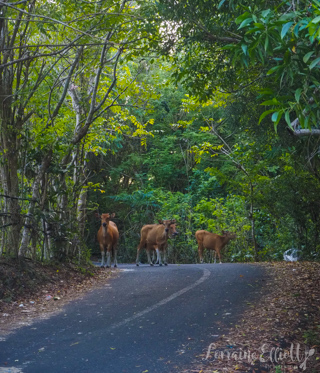
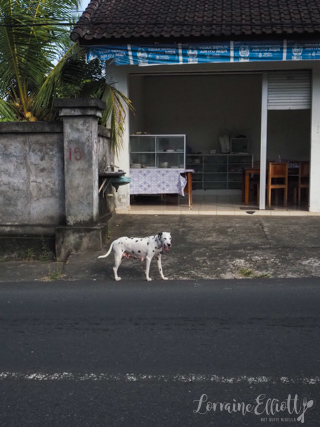
We are at an impasse. A small herd of Banteng cows are standing in the path - the dark cows are male while the lighter are female. Their small calf regards us with bold curiosity and without fear. Its mum is behind, munching on leaves from a tree. But as we approach the herd shuffles away as a group. We pass another mother, a nursing dalmatian with distended teats looking for food from a local warung.
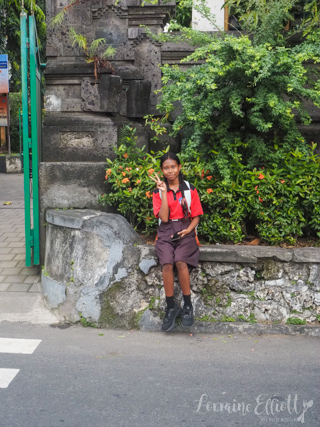
A school girl in uniform waits in front of the school and as we walk past she gives us a bright "Good Morning!". We walk past mango and banana trees and trees laden with small yellow coconuts. Sri explains that these coconuts are important to the people of this village as they are used in ceremonies.
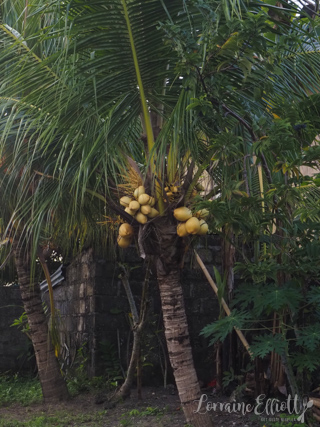
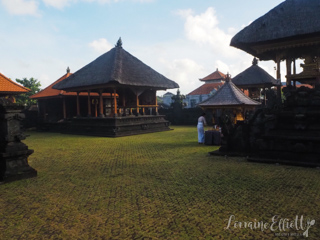
Balinese Hinduism is replete with ceremonies whether it be ones celebrating birth, weddings or death. Ungasan's temples are shared between families, sometimes around 100 families and these pooled resources allows villagers to hold elaborate ceremonies for those that have passed. Every few years these celebrations are held to commemorate those lost.
Huge, towering penjors are symbols of prosperity made from bamboo and young coconut leaves and are erected before the Ngaben death ceremony as well as important Balinese festivals like Galungan and Kuningan where they celebrate good (dharma) over evil (adharma) and the return of ancestral spirits. White lace kabaya clad women carry trays of offerings and incense. Their foreheads are adorned with three grains of rice between their eyebrows. These are a symbol of blessing from the gods.
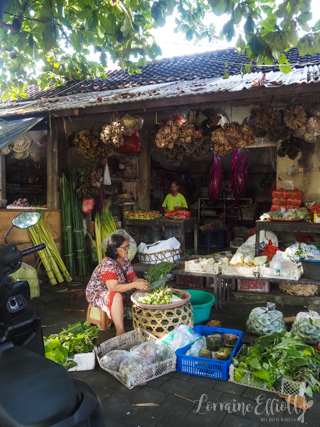
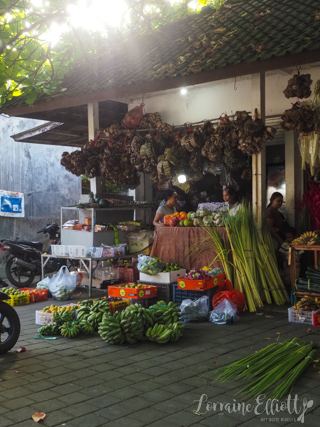
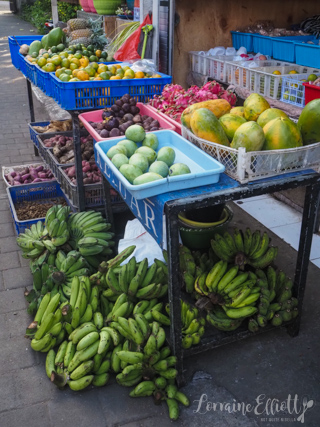
We walk through Ungasan market fragrant with flower blossoms like cempaka that are used as daily offerings. It is quiet today as it is Saturday but tomorrow will tell a different story as the markets come alive. We arrive at a local woman's home for breakfast. Kadaek is friends with Sri and her home is designed with Balinese architecture with the detailed bas relief carvings in wood. Each house in Bali has a temple that faces on the north Eastern side of the property as this points towards the sacred Mount Agung and the sunrise.
Sri explains that in Bali the first born is always named Wayan or Putu, the second Made or Kadaek, the third is Nyoman or Komang and the fourth is Ketut (meaning tail). The names are assigned, regardless of gender and the way to tell people apart is by their surnames. And because families are smaller nowadays, there is a preponderance of Wayans, Putus and Mades.
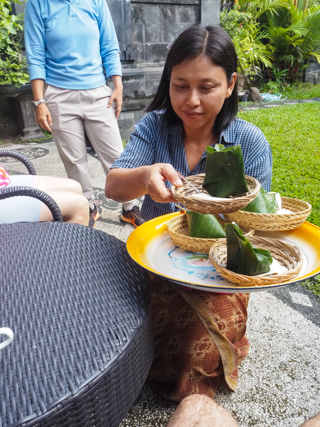
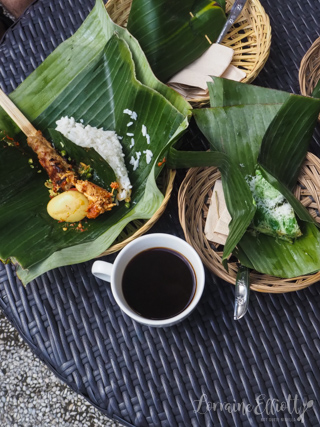
Kadaek brings us hot coffee and banana leaf wrapped packets of Nasi Jingo and Klepon cake. Nasi Jingo is a smaller version of Nasi Campur and it is the perfect size for breakfast.
Inside there's a delicious chicken satay lilit, steamed rice, lawar kacang panjang (long bean and coconut salad) and ayam pelalah (shredded chilli sambal chicken). Klepon is glutinous rice balls filled with palm syrup and fresh shredded coconut on top that are absolutely moreish.
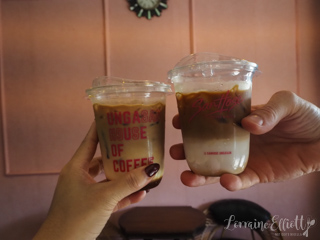
After bidding Kadaek adieu we recommence our stroll through the village stopping by for an iced latte at San Hose coffee and bites at the T junction of Bali Cliff Road - it's not a stop on the tour but the heat is sapping and I need an iced coffee.
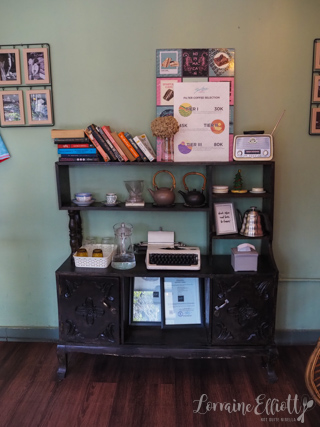
This gorgeously retro hipster cafe has a range of iced coffees including black honey coffee, blueberry coffee and coffee Melasti made with brown sugar as well as matcha lattes and hot tea.The Iced Melasti is delicious while Mr NQN enjoys the blueberry coffee with its tangy, fruit syrup.
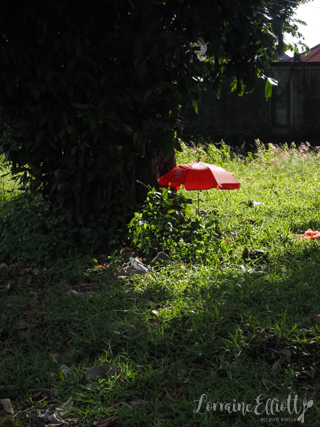
We finish the tour at the village cemetery where only locals can be buried. The cemetery bears no gravestones and the only signifier is the red umbrella that shows that someone is buried there and is waiting for the funeral ceremony. After the service, the soul is then free to pass and no longer remains on this earth. A glimpse into Samsara and the cycle of life.
So tell me Dear Reader, do you enjoy village walks like this?
Tips For Village Walk
7am is an early start for some of us but it is coolest then. Any later and the sun will be too warm for a comfortable walk.
Wear light, breathable workout gear and shoes for walking as you will walk around 7kms on this walking tour. There is also the option to get a car back to the hotel after the cemetary visit.
Unganasan Village has cafes, tailors, spas and restaurants so you can always linger longer and walk back to the hotel.


Reader Comments