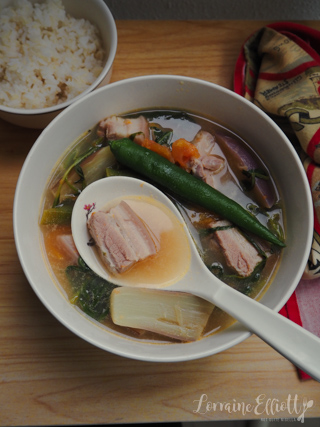
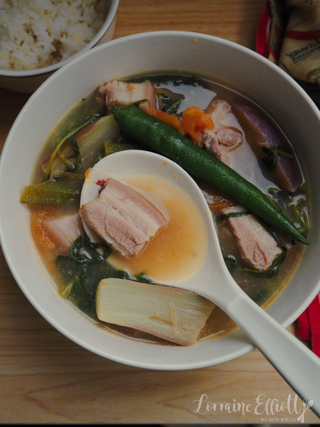
Warm up with a bowl of authentic Filipino Sinigang Soup! This traditional recipe combines tender pork, eggplant, okra, daikon and kang kong in a tangy tamarind broth that's light, comforting and packed with flavour. Sinigang is one of the Philippines' most beloved dishes and surprisingly easy to make at home. Save this authentic sinigang recipe for a cosy family meal!
About This Sinigang Soup Recipe
Sinigang is a delicious Filipino soup dish combining meat or seafood with vegetables and a lightly sour tamarind flavoured broth. Often considered one of the national dishes of the Philippines it is a wonderful comfort dish served with rice. Sinigang translates to "stewed" in Tagalog. And I'm sharing an authentic Filipino recipe thanks to my parents' live in helper Del who is from the Philippines and is a fantastic cook!
What is sinigang made of? This wonderfully versatile Filipino dish is made with a meat or seafood base with vegetables like eggplant, okra, spinach (usually water spinach like kang kong) and daikon radish. The broth is flavoured with tamarind and fish sauce.
Is Sinigang soup healthy? Yes! Very healthy as the broth is light and it is packed with vegetables. It becomes even healthier if you choose a lean meat or fish.
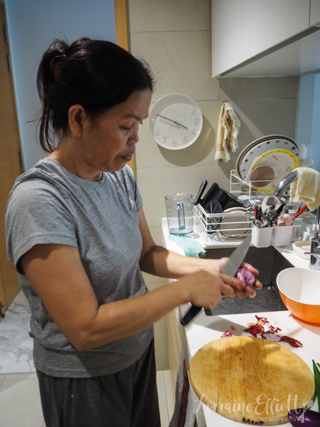
Del has taught me how to make some delicious Filipino recipes like Leche Flan, Cassava Cake, Chicken Adobo, Kare Kare stew and Pancit noodles. I love her recipes because they're so delicious and authentic!
Video How To Make Sinigang Soup
Ingredients For Sinigang Soup
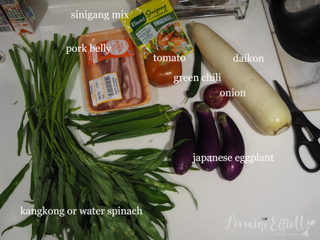
Pork - Pork is usually used and commonly pork belly, pork shoulder or pork ribs are used. If you love cooking with it, I've got lots more pork recipes too.
Onion - You only need a small red onion.
Tomato - Use one large fresh tomato.
Tamarind - This is the key ingredient to making the signature sour taste. You can buy a sinigang mix which is mainly tamarind powder or you can also use tamarind paste which is easily available at supermarkets nowadays. Other subs for tamarind are rice vinegar which is a mild vinegar (not white vinegar, too strong!).
Stock cube - Use a chicken or pork stock cube (pork stock cubes can be found at Asian grocery stores).
Fish sauce - You can use either fish sauce or salt to season the broth (along with chicken powder).
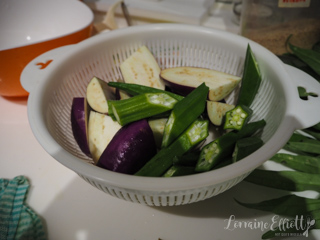
Eggplant - We use slender Japanese or finger eggplant as these don't need to be salted before using.
Okra - Usually Del would use smaller okra but the shop only had larger ones.
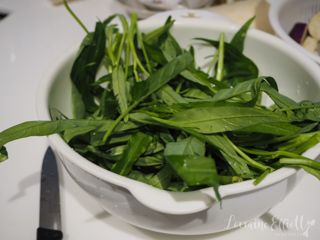
Kang kong or water spinach - You'll have to go to the Asian market or greengrocer's for kangkong. Other subs for kangkong are spinach, sweet potato leaves, kale (Tuscan or cavolo nero) or Swiss chard.
Daikon radish - Also called white radish, this may also be an Asian market item depending on your supermarket. Other subs are jicama or turnips.
Chilli - Del specifies that only long green chilli is used (sometimes a small green chilli but never red!).
Tips For Making Sinigang Soup
1 - As I mentioned, sinigang is super versatile. Normally pork is used (cubed pork belly, pork ribs, cubed pork shoulder) but you can also use beef (brisket or chuck), salmon or prawns.
2 - If you use beef, Del advises to cook it in the pressure cooker in broth until soft. Then use the broth for the sinigang soup. And if you use salmon or prawns, they need around 5 minutes max to cook in the soup so add the vegetables first.
3 - According to Del, kang kong is good for diabetics. She also discards kangkong leaves where insects have taken bites out of them.
4 - When prepping okra, if you can snap off the pointy end of the okra, it is fresh.
5 - Other vegetables you can use in sinigang are string or yardlong beans, potato and taro.
6 - It's important to taste the sinigang so that it is the level of sourness or salt that you like as everyone differs on how strongly sour they like food.
7 - Sinigang is often served with steamed white rice but you can also serve it with rice noodles or noodles. It makes such a cosy dinner on a cold night.


Reader Comments